Wednesday, July 2, 2014

Summer Reading!


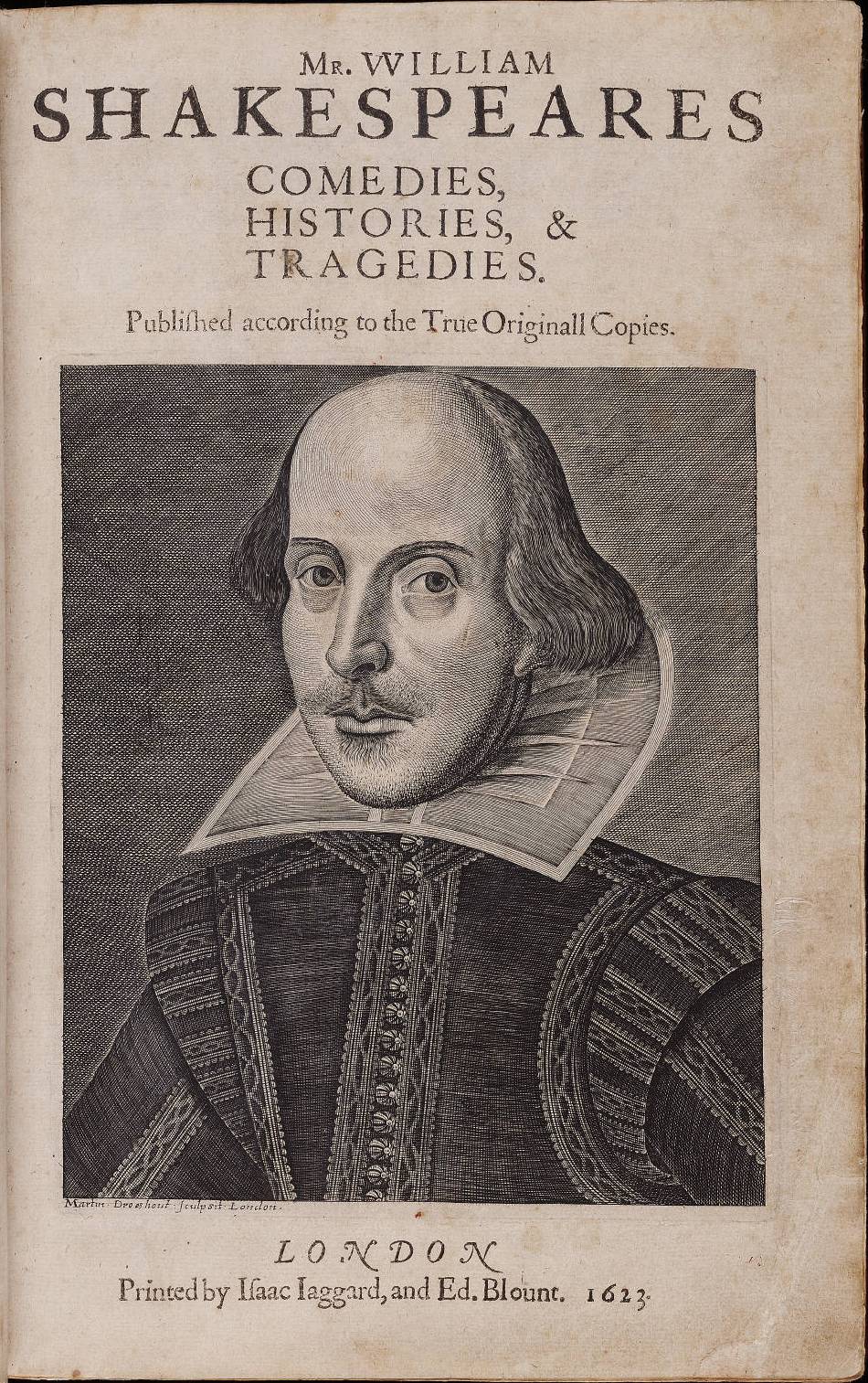
The last blog post addressed the challenge of summer writing, but for those rainy days when you need to be inspired, or lose yourself in another world, perhaps you should pick up a book to read.  Summer provides students with the chance to read books for pleasure.  While you may have thoroughly enjoyed your book on human resource management, algebra, biology, and Shakespeare, it is nice to choose your own book.

The used bookstore, Another Story at 524 N 18th St in Allentown, is a great place to start.  While ereaders can be great for people on the go, and traveling, sometimes it is best to just hold a book.  There is nothing that compares to the smell of a book when you open its pages to explore the world in a new way.  For a new book, there is the feeling of the binding as it begins to crease for the first time with your touch, and a used book can hold the wrinkles and folds of well-loved pages for years to come.  


From the classic masterpieces that fill literature courses, bringing an understanding to the centuries past and the lives lived during those times, to the current novels filling bookstore shelves that provide a different facet of the same revered stories, there is much to choose from.  Here are a few story ideas to help you pick some summer reading to enjoy.

Cedar Crest gives the group of incoming freshman a book to read before the school year starts, but this book would be a great read for everyone.  The title of the book is Do It Anyway: The New Generation of Activists, by Courtney E. Martin.  If this is a book you would like more information on, I am providing the Amazon link.   
Do It Anyway

For some great classics, check out this list of 25 American classic books:  25 American classics

Still stuck, check this list out for more inspiration:  100 Novels Everyone Should Read
 

Thursday, June 5, 2014

Challenge Yourself This Summer!


Summer has set in, and for those who are not taking summer courses, the homework and papers piled up are a thing of the past...until fall semester begins.  The last thing you may want to think about is writing.  The weather is nice, the beach sounds like a great option for the summer.  Some of you may be taking summer classes and plan to continue the academic work with only a small break.  While the idea of spending your free time writing could seem a bit daunting, it can be fun.

Creative writing is a great outlet for many people.  It can be as simple as writing in a daily journal, tackling a daily prompt, writing poetry, or as complex as tackling a novel.  Rainy summer days, with a fresh story in mind, can challenge you to do something you never imagined.  There are many sites online that give out daily writing prompts and this can help you if you get stuck on what to write about.  

While the academic writing can burn you out, you may be surprised by how much creative writing can inspire you.  It is not for everyone, but some people may not realize a novelist lives inside of them until they put their ideas down and run with them. 

Here are some great blogs to help you get in the mood to write:

Check out "The Write Practice," which is a great blog/site created by Joe Bunting and contributed to by other aspiring authors.
http://thewritepractice.com/

Another great site is "Goins, Writer," written by Jeff Goins.  He answers lot of questions and helps people on the path to great writing and publication.
http://goinswriter.com/about-me/

Larry Brooks, bestselling author, and writing blog writer, provides a plethora of information in his blog, "Story Fix."
http://storyfix.com/about

These are just a few of the thousands of blogs out there that can help to teach and inspire you.  So when the pool is closed, the rain pours, the heat becomes too much, or you want to try something different, take a plunge into your heart and create a story.  You may surprise yourself.


Monday, March 31, 2014

, Appositives,

Commas are one of the most difficult grammar concepts to grasp, and one of the most common comma confusions is regarding appositives. "What in the world are appositives?" you may ask. Well, in simple terms an appositive is a noun or noun phrase which renames or redefines a noun right next to it. Let me give you some examples.

Noun: Blue   Appositive: Green

1) My brother Liam lives in California.

See how Liam only renames brother? It doesn't really add extra information about brother.

2) Violet, my purple cat, is the strangest cat in the neighborhood.

Again, Violet only renames cat without adding outside information. 

Did you notice the two commas around the appositive in the second example, and none around the appositive in first example? Sometimes the noun is too general without the appositive, and the meaning of the sentence changes without it.

If I took out Liam in the first example, I will be left with:

1) My brother lives in California.

Which brother? Liam, Jacob, John, Bobby, or Tommy? The sentence is now too general to give the message it gives with the appositive. Therefore, it needs no commas; all the information is essential.

In the second example, taking out the appositive will leave:

2) Violet is the strangest cat in the neighborhood.

This sentence remains specific to the one cat, Violet, even though the reader no longer knows that it is my cat. It gives the same message with and without the appositive. In this case, you need commas on either side of the appositive. 

Lets do a few more examples.

1) The vacation house, a large contemporary villa, was near the beach.

A large contemporary villa just renames the noun house. Again, because the sentence works without the appositive, you must place commas on either side of it.

2) My college begins its new semester in August, the most sweltering month of the year.

In this example, August is being redefined as the most sweltering month of the year. Had the appositive been in the middle of the sentence, it would have needed two commas. However, as it is at the end, the period takes the place of the second comma.

3) The first president of the U.S., George Washington was a general during the Revolutionary War. 

4) The author of The Lord of the Rings, J. R. R. Tolkien was a legendary linguist.

In number three and four, the appositive comes at the beginning of the sentence. Therefore, the same rule applies as example two except the first comma is dropped instead of the second one.


Although appositives may seem like a difficult concept in the beginning, being aware of what they are can help you notice them in your reading. As you become more familiar with appositives, start to incorporate them in your writing. With steady progress, you will soon be a pro!

Monday, March 17, 2014

WHY Must We Take WRI?


“I came to college for a degree in biology …so WHY do I have to take Writing 100?”

Well…why not? I mean, don’t you have anything else to do with your time?

Of course you do. But, as much as you don’t want to hear it, Writing 100 is not just a piece of the liberal arts curriculum necessary for graduation. Writing is a skill that will give you an edge in every aspect of your life—not just to make an intriguing twitter post.

Writing is an essential tool that allows you to learn many crucial skills. It enhances your ability to organize and process information, to be clear and concise, and to fine tune your work.

Yes, you might be able to learn these skills in the lab or in the music studio. But in our increasingly digital universe, faster and more concise communication is necessary: It could make the difference between a job and unemployment.

Don't let writing stand between you and your dream job!
Okay, so that might sound a little far-fetched, but is it really? Would you really want something as simple as writing skills to get in the way of your dream job?

So the next time you complain about trudging through the rain or snow to a dank Blaney basement room, remember that you are learning skills that you can use in real-time, for what matters to you. Whether it’s a cover letter, lab report, marketing pitch, documentary log, or personal statement, writing is equivalent to success.

Don’t let writing get in your way. Stay in Writing 100, learn what you can, and get ready to focus on what’s important to you.


For some more information, check out this list of “What Makes Writing So Important?” from Marquette University: http://www.marquette.edu/wac/WhatMakesWritingSoImportant.shtml. 


Tuesday, March 11, 2014

The Problem with Prewriting


The Problem with Prewriting


  How many times have you heard about the writing process, seen diagrams, listened to professors as they explain the writing stages?  The steps to writing have been drilled into us, but there is a serious problem with the prewriting process; people skip it and start out with the writing stage. 


Prewriting is a crucial element in the development of good writing.  When you are assigned an essay, you should always take time to think about it, plan it, research it, plan some more, and outline your main ideas.  

One of the best ways you can break through the ominous writer's block, which can inhibit the flow of words on your screen, is to brainstorm.

                                
                 You can make a list of random ideas, a flow chart, a diagram, a jumble of sentences with possible connections.  Brainstorming can be twenty minutes of freewriting, it can be the exploration of a topic from various perspectives, it can be a list, pictures, or anything that helps you to get your creative juices flowing.  Once you have some great concepts or ideas, try to connect them, make sense of them, and explore how they can work together.   

                 After you have your topic and some great ideas, you can begin an outline.  From your introduction to your main ideas and conclusion, you should organize your ideas in a way that makes sense and flows.  This will help you to develop your thesis and to create a strong essay that keeps the reader on track.  

                 While there are many other things that should be considered in the development of a great paper, prewriting should come first.


Tuesday, February 4, 2014

Once Upon A Time...

While looking for inspiration on the internet for a story, I stumbled upon a gem on one of my favorite websites, Tumblr. It is an entire Tumblr page solely dedicated to providing writing prompts. Looking for ideas to write about can be difficult and time-consuming. Therefore, I wanted to share some of my favorite writing prompts from the site with you. 


You can look through the Tumblr page yourself using the following link:
http://writingprompts.tumblr.com/
 
Enjoy!


Sunday, November 24, 2013

The DOs and DON'Ts of Writing

students3k.com/wp-content/uploads/2013/03/dos-and-donts-work.jpg
I recently came upon a list that described the Do's and Don'ts of writing a paper from the University of Tartu. I wanted to share this list, not because I found it amusing, but also because it seemed pretty relevant to what I see here in the Writing Center.

Here is my (abridged) version of 10 Do's and Don'ts when writing a paper:

DO be conscious that  phases of writing exist and differs person to person. One person may benefit from writing a complete introduction first while others like to dive right into the body.
DON'T go into a paper without any plan!

DO define your topic! Then refine it with a good hypothesis.
DON'T attempt to cover everything that your class has taught you within the semester.

DO collect information that is relevant to your topic and make sure you take good notes. This will make the highly feared citation process easier.
DON'T copy word-for-word from a resource. It's not cool and it's plagiarism.

DO write on a regular basis. Pace through the paper.
DON'T write the night before a paper is due or "when you're in the mood".

DO organize your arguments and explain each step.
DON'T accumulate facts without any explanation.

DO write first, correct later.
DON'T expect a perfect rough draft. It's rough for a reason.

DO realize writing is a learning process. Hence the existence of the WC!
DON'T set high standards for the first draft. It'll frustrate you more.

DO be trouble-shooting oriented when writing. Go back one phase in your writing process and re-work it until you have overcome the issue. If you get stuck ask others for advice or see us at the WC!
DON'T work through issues you have questions on alone.

DO build confidence as a writer!
DON'T be hypercritical of yourself when writing or set unrealistic goals.

To see the original list, go to http://blog.ut.ee/10-dos-and-donts-to-solve-your-writing-problems/.
-Lindsay